Hellite Era Currency
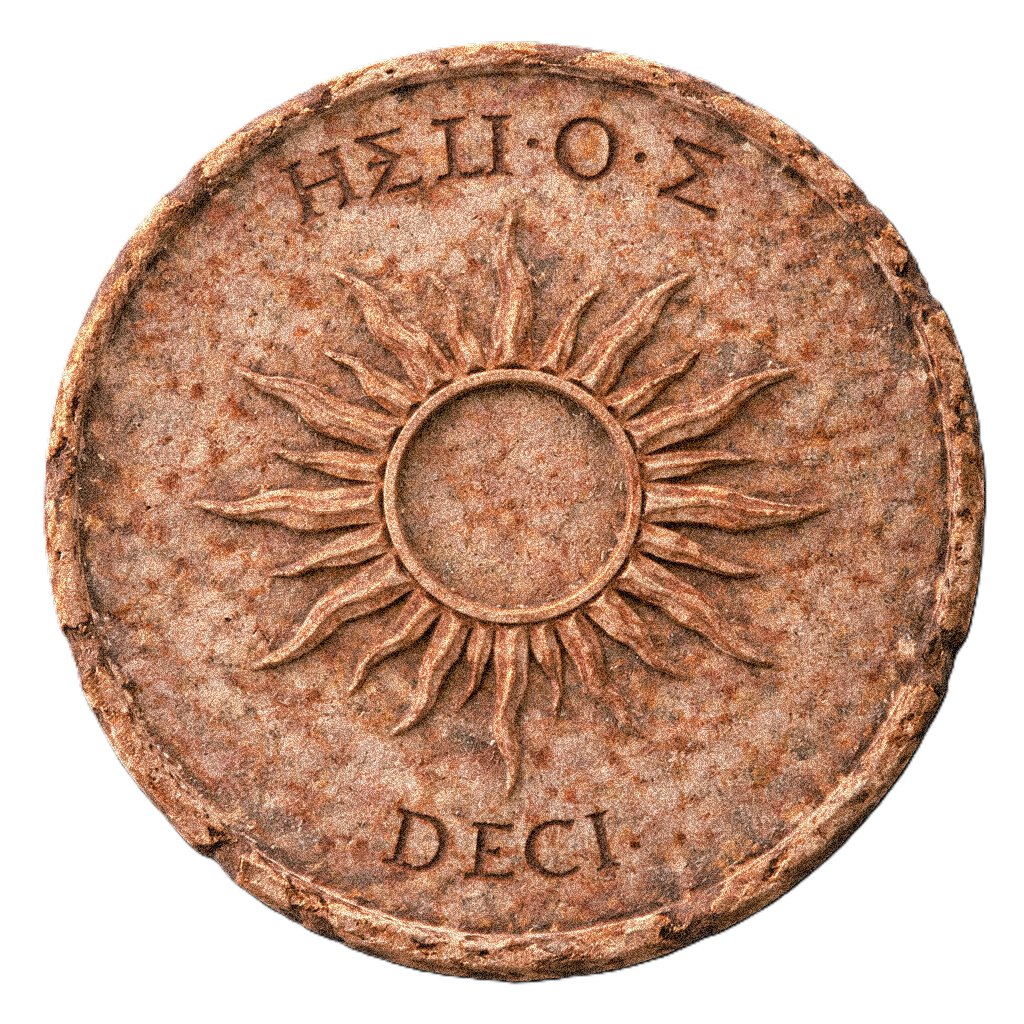
Hellite Token
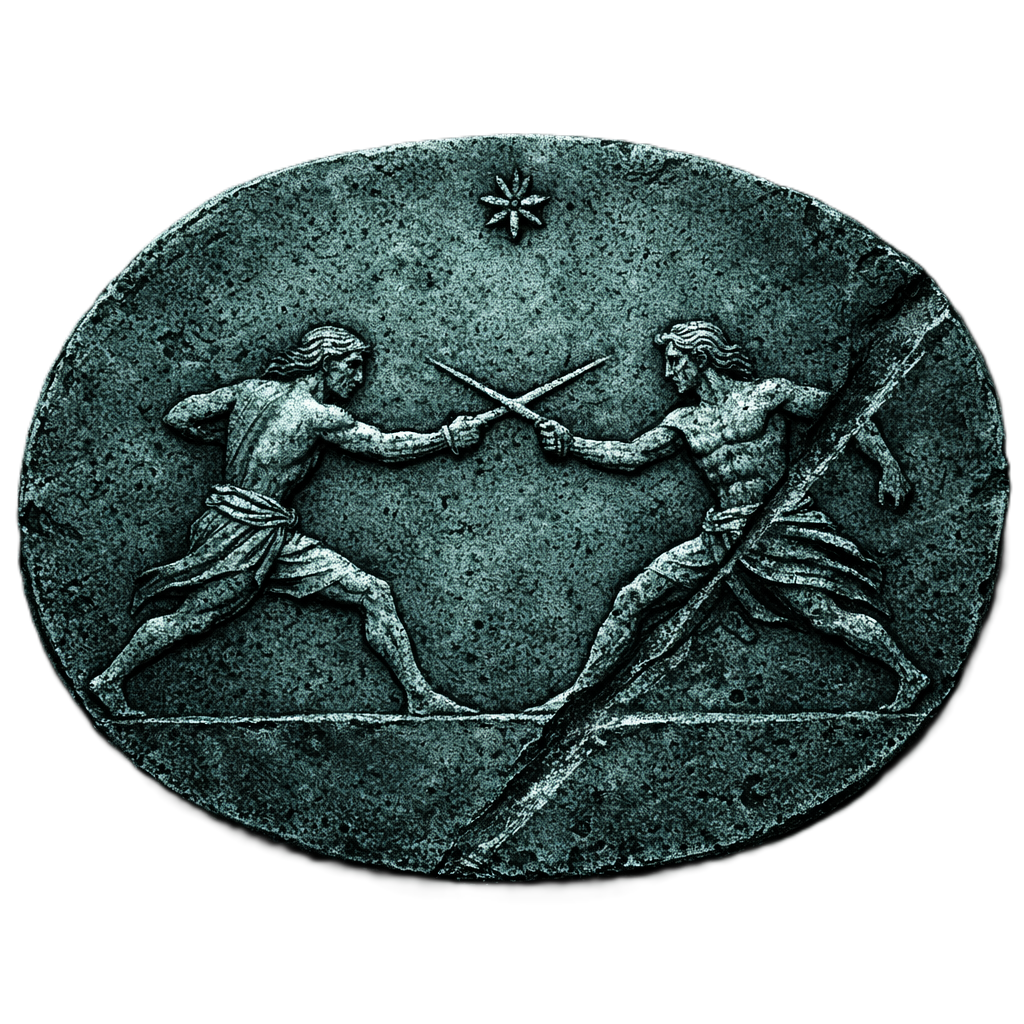
Linite Coin
-
Recovered from the city of Helios, this ceramic token represents a standard unit of local currency, identified by the inscription Deci which was likely it’s value. The central motif—a stylized solar seal—serves as both a civic emblem and a mark of authenticity, reinforcing Helios’s identity as a city symbolically and politically aligned with solar imagery.
Unlike the metal coinage of neighboring Linium, Helios relied primarily on ceramic tokens for everyday exchange. This divergence appears to have been driven not by technological limitation, but by resource distribution. The Helion region possessed access to a rare red clay deposit, the properties of which made it uniquely suited for currency production. When fired, this clay produced tokens of consistent color, density, and durability.
The distinctiveness of the material made replication difficult, effectively serving as an early anti-forgery measure. As a result, Helion ceramic tokens maintained credibility both within the city and in surrounding regions, where their recognizable color and texture functioned as markers of authenticity.
The solar seal itself appears across multiple Helion artifacts and architectural motifs, suggesting its role extended beyond currency into broader civic and cultural symbolism.
-
Linite Warrior Coin, Late Hellite Period
Recovered from excavations in Lesser Helium, this coin is attributed to the city of Linium during the late Hellite Period. The oval medallion depicts two combatants crossing slender thrusting swords, a motif believed to represent martial skill or ritualized combat traditions associated with the city.
Similar imagery appears across multiple Linite artifacts, indicating that the theme of paired warriors may have served as a civic emblem. Intriguingly, descriptions of comparable dueling practices appear in the Memoirs of Xanthea of Helios, suggesting that the martial traditions of Linium during its political prominence.
Metal currency from this era is relatively uncommon throughout the Hellite regions, where ceramic and composite tokens were more typical. Linium appears to have been a notable exception. The city possessed extensive mineral reserves and highly developed metallurgical industries, allowing it to mint coins in metal economically unfeasible for other cities. These coins circulated widely and were prized beyond Linium itself, often valued simply for their metal content.